 Skip to content
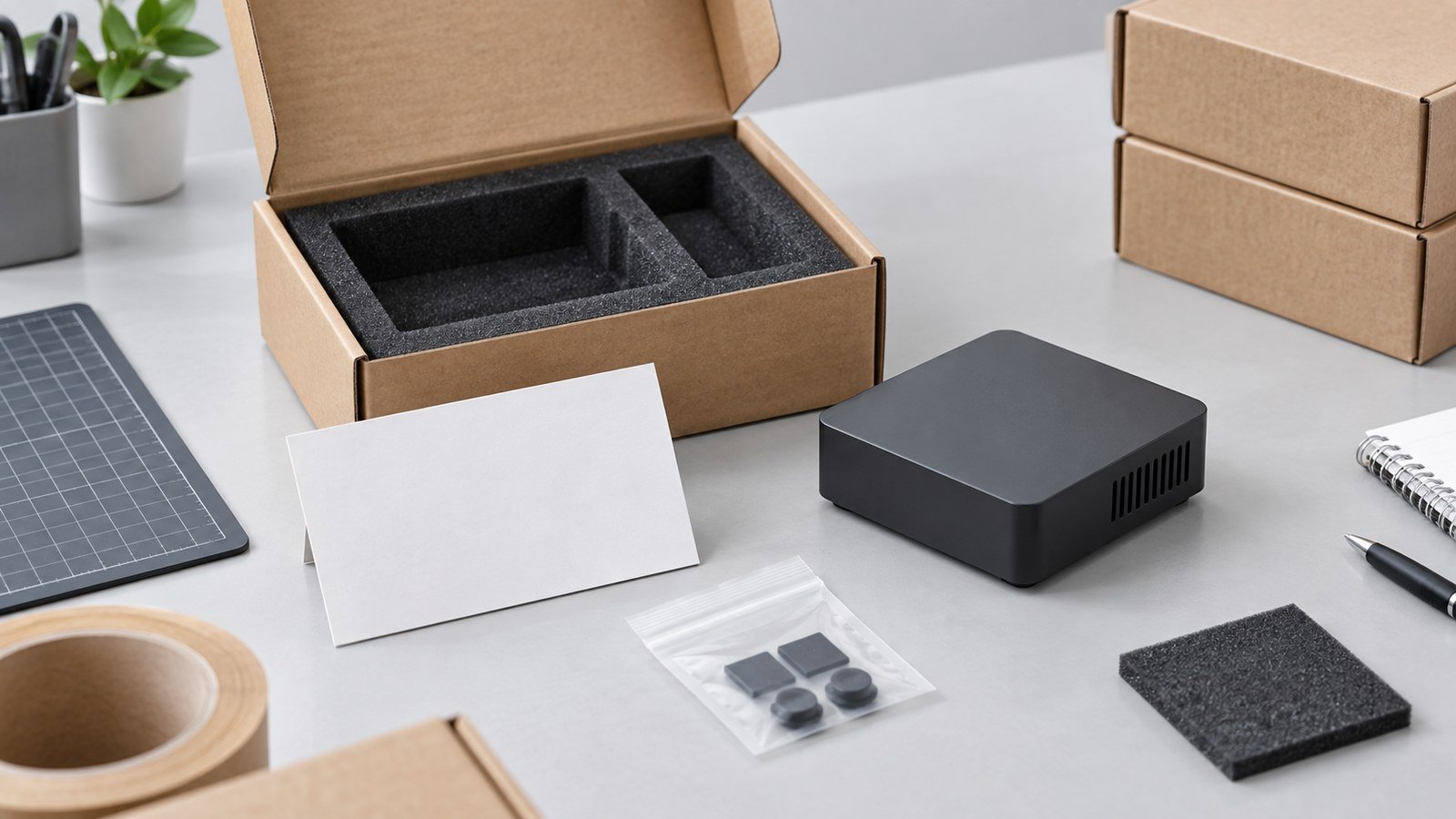
A reseller preparing a new Pi 5 kit can make a surprisingly expensive mistake before the first carton is packed: treating the case as a cosmetic add-on. I look at the case as part of the retail promise. It affects what can be assembled, what the listing can honestly say, which cables fit, how cooling is handled, and which support questions reach the seller after launch.
A Raspberry Pi 5 case for retail kits should therefore be approved as a controlled configuration, not chosen from a photo alone. The best starting point is a small, clearly separated SKU range, a real fit check for the intended board and accessories, and packaging information that does not promise features the product has not been verified to provide.
Design the retail SKU architecture before choosing a finish
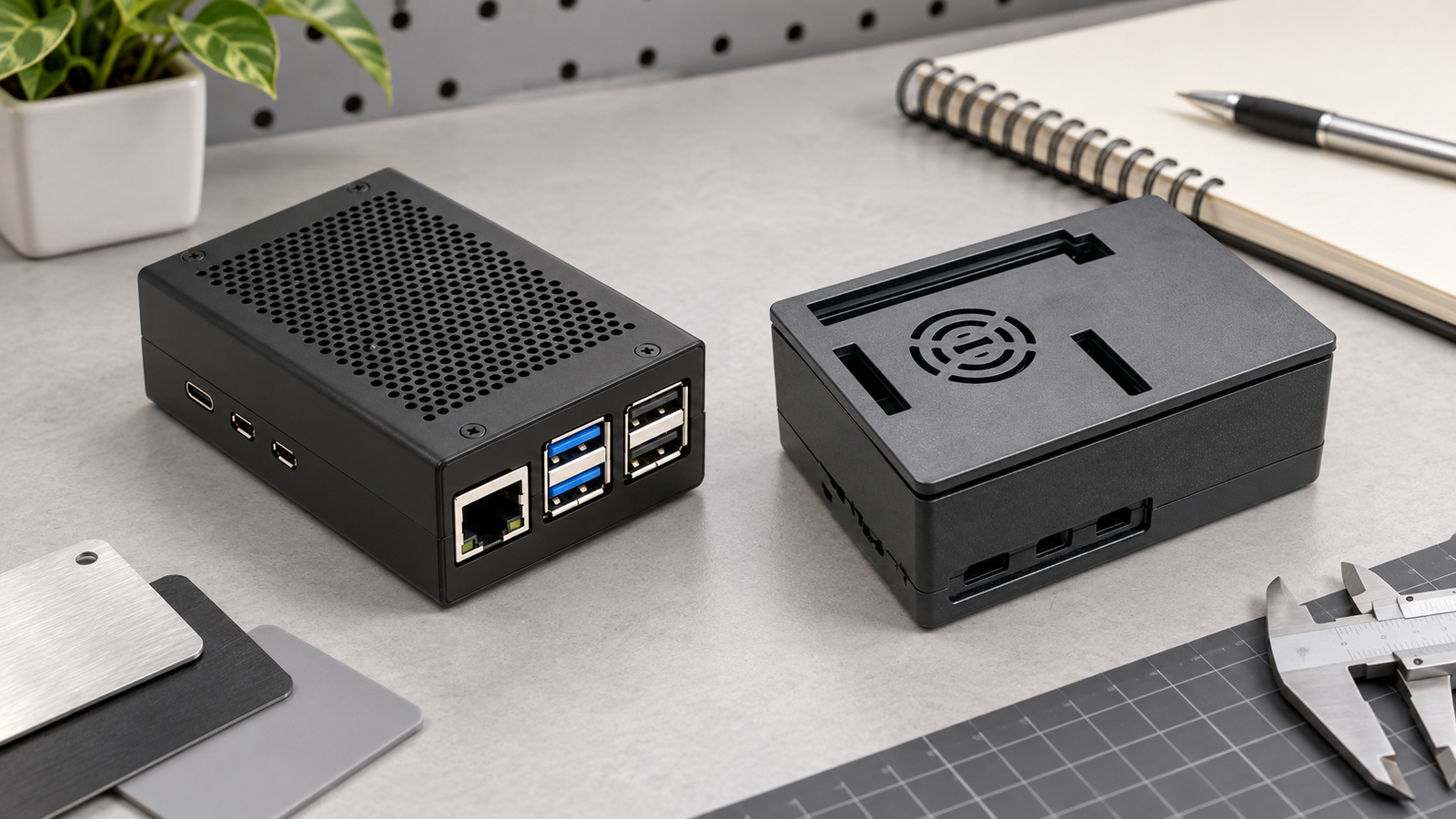
My first question is not “Which case looks premium?” It is “What job does each retail SKU do?” A reseller who stocks one vague “Pi 5 kit case” invites substitutions, unclear listings, and avoidable returns. A tighter range can separate a compact metal/heatsink-style option, a plastic active-cooling option, and any special build that needs room for a particular accessory.
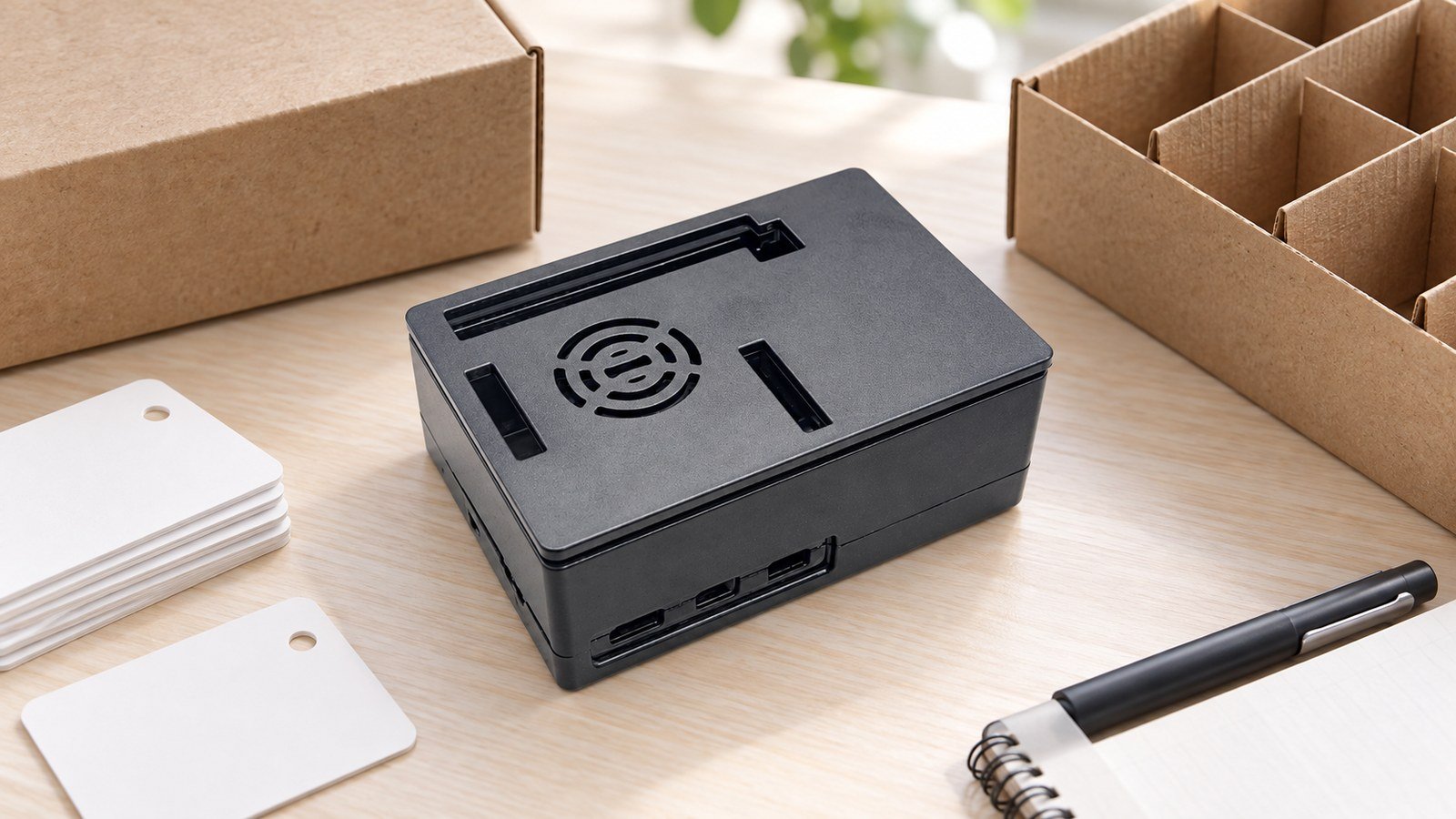
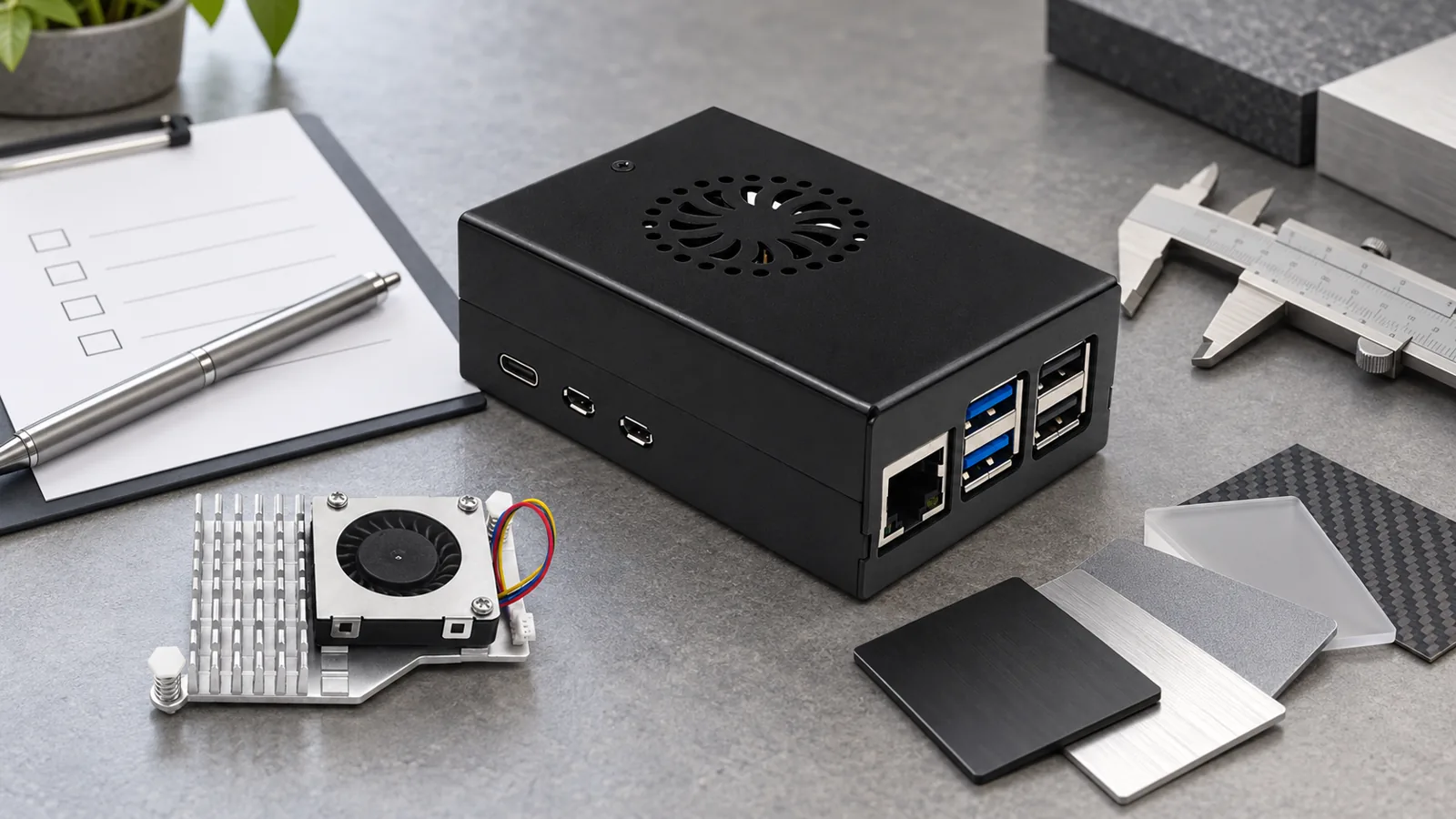
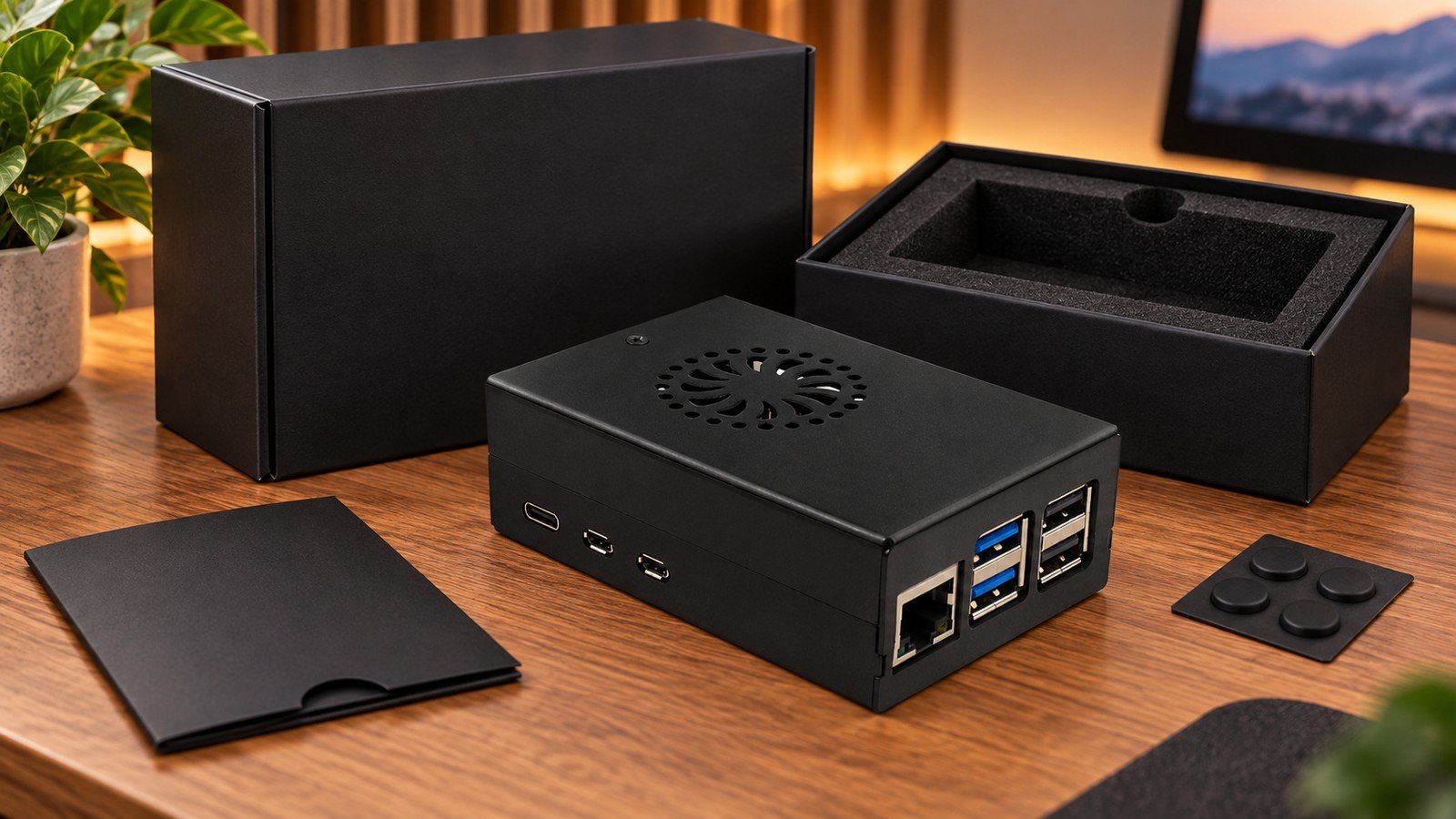
Start with the Raspberry Pi 5 case range, then create a one-line purpose for each candidate. The inventory includes an aluminum Pi 5 case option and an ABS active-cooler case option. Those are useful starting architectures, but the product title alone is not a retail approval. Confirm the actual configuration before assigning it to a kit.
| Retail-kit role | What the buyer must define | What should stay separate |
|---|---|---|
| Standard desktop kit | Board revision, intended peripherals, required cable exits, service access | Any build needing unusual height or expansion clearance |
| Sustained-workload kit | Cooling approach, fan/heatsink clearance, noise expectation, power plan | Passive-looking cases that have not been approved for the workload |
| Private-label starter kit | Exact included parts, leaflet scope, packaging and SKU identity | Mixed accessories that make support instructions ambiguous |
Confirm the complete Pi 5 fit, not only the board outline
Pi 5 has dual micro-HDMI, USB ports, Gigabit Ethernet, USB-C power, a 40-pin header and expansion interfaces; each can change the usable clearance around a case. Raspberry Pi documents those board capabilities, but a board specification is not proof that a particular third-party enclosure clears a HAT, M.2 adapter, cable bend, fan, or display ribbon. I would keep the intended retail configuration on the approval sheet rather than let a generic “Pi 5 compatible” label do too much work.
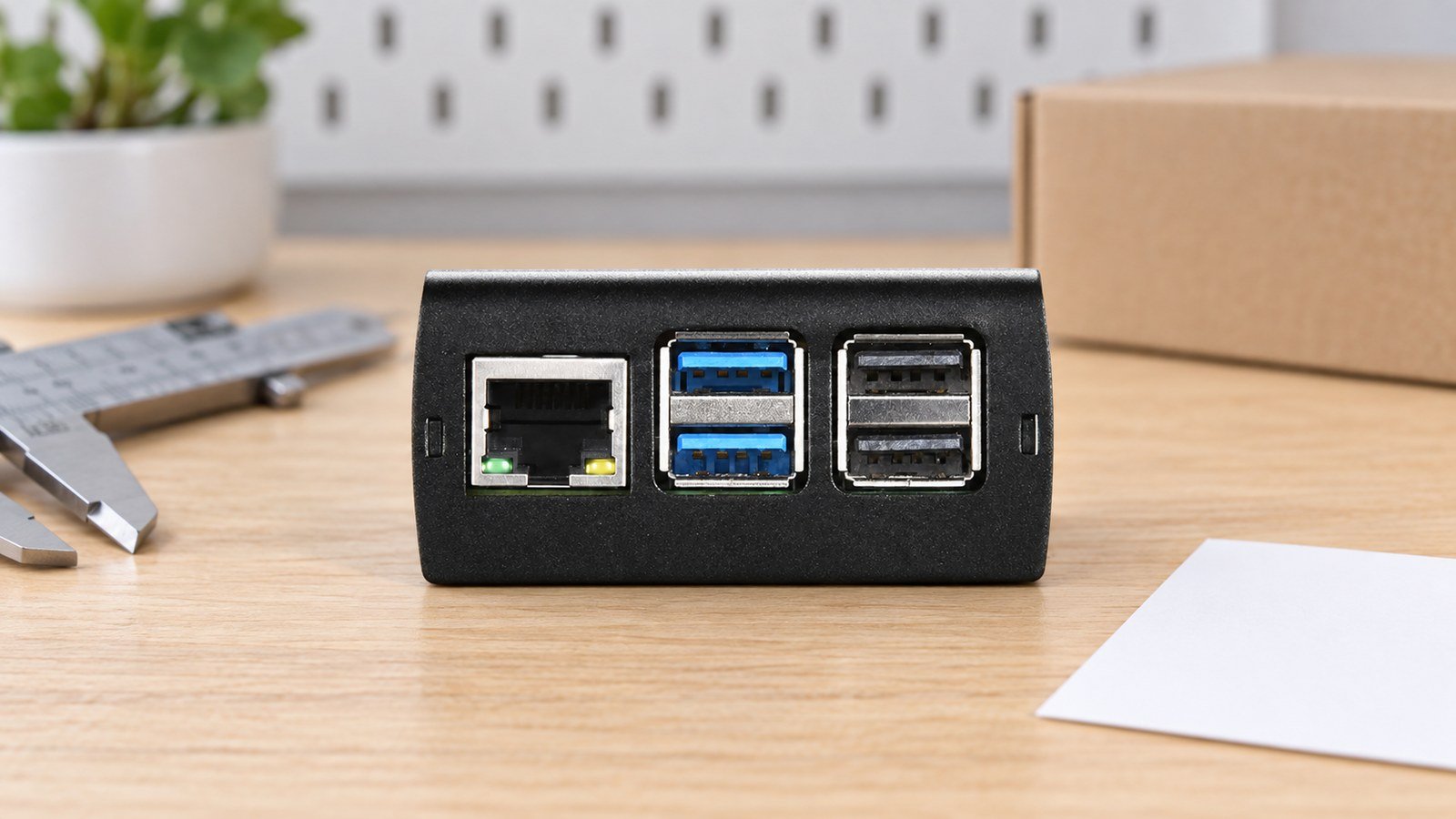
For a kit that includes a power supply, record it as part of the SKU, not as a loose afterthought. Raspberry Pi recommends a high-quality 5 V 5 A USB-C supply for Pi 5, while its guidance notes that peripheral behavior can differ with an under-powered supply. A listed Pi 5 power-supply option can be discussed alongside the case, but connector clearance and included-country plug requirements still need confirmation.
Treat cooling as a kit decision, not a marketing badge
“With cooling” is not enough detail for a product page. Raspberry Pi says active cooling is optional for normal use, while sustained heavy work can lead to thermal throttling. That is a useful planning boundary, not a measured result for any third-party retail kit. The practical question is whether the reseller’s intended workload and assembly can support the cooling architecture being sold.
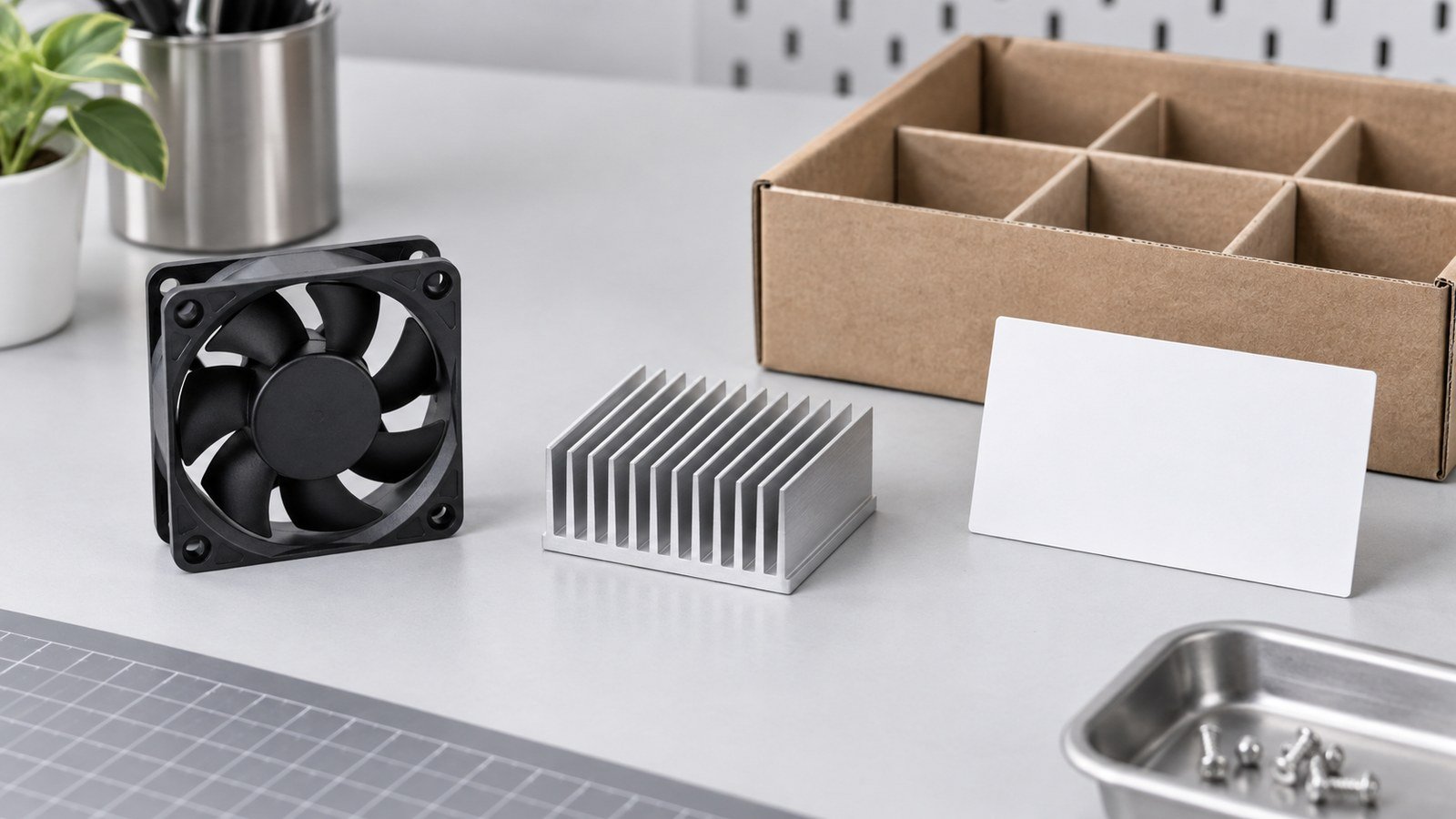
I prefer the listing and carton to name only what is actually in the box: case, fan if included, heatsink if included, thermal interface item if supplied, and any instructions. Keep cooling claims conditional unless the exact configuration has verified test evidence. This gives a buyer room to choose a fan-oriented kit for sustained work or a different architecture for a simpler build without turning a styling choice into an unsupported performance guarantee.
Decide what branding can safely cover
Branding should clarify ownership of the retail offer, not hide unresolved product facts. A sensible approval record separates brand artwork, insert copy, barcode or SKU code, color/finish reference, and the precise included-parts list. In my view, the artwork review is complete only when it agrees with the physical approval sample and the listing copy.

Avoid adding unsupported language such as official approval, ingress protection, a temperature reduction, a universal fit, or a certification mark. Raspberry Pi is a trademarked product name; use it descriptively for compatibility where verified, and do not imply that a third-party branded kit is an official Raspberry Pi product unless that status is actually established.
Approve packaging and receiving controls before deeper stocking
A single approved sample is useful, but it is not a substitute for a repeatable receiving check. I would give the warehouse or fulfilment partner a simple card that can distinguish the SKU without opening every carton: case architecture, color, included cooler or thermal parts, power-supply region where relevant, printed insert revision, and carton label.

The point is traceability, not bureaucracy. Keep look-alike configurations apart in the purchase order and receiving record. If an item arrives with a changed fan, an altered opening, different insert, or unclear included parts, hold that line for review instead of silently substituting it into an existing retail listing. That decision costs less than unwinding a customer-facing mismatch later.
What should a reseller ask before placing a branded case order?
Can one Pi 5 case cover every retail kit?
Usually, no. Board generation, cable exits, cooling parts, HATs, SSD adapters and service access can change the fit. Separate the standard kit from special configurations until each is confirmed.
What should go on the approval sample record?
Record the case identity, board configuration, visible access needs, included parts, power plan, cooling approach, artwork revision, packaging layout and listing language that depends on those facts.
Can I claim active cooling for any fan-looking case?
No. State only the included, verified hardware and avoid a performance claim unless the exact kit has supporting evidence.
Turn the retail-kit check into a fit-confirmation brief
Before I would quote or stock a retail case kit, I would want one short brief: Pi 5 model and intended assembly, required port and GPIO access, accessory stack, cooling preference, power-supply scope, case finish, included parts, artwork/packaging requirements, destination market, and quantity. That is enough to identify questions early without inventing commercial terms.
Send the intended Pi 5 configuration and the proposed kit contents before committing artwork or stock. We can use that brief to check the closest case path and the points that still need confirmation.


Leave A Comment