
Key Takeaways
-
Both Raspberry Pi and Orange Pi are great for hobbyists and professionals. They serve slightly different purposes. Think about your exact needs in terms of processing power, connectivity, and additional features when deciding.
-
Raspberry Pi has solid community support. It also provides a huge range of software resources and can be a great fit for beginners and anyone who loves community-oriented development and troubleshooting.
-
Orange Pi offers a greater range of hardware options. It can also be a more budget-friendly option if you specifically want features such as extra RAM or a faster processor without spending all your money.
-
Each board offers its own distinct benefits. The Raspberry Pi shines for its overall quality and user-friendly experience. Orange Pi provides more flexibility and better performance in some configurations.
-
Where Raspberry Pi shines is education and prototyping. Choose Orange Pi for projects demanding more computing power or specialized applications.
-
Prices and availability are accurate as of publication but may change. To get the best price, do some research on current market conditions and ask the official distributors for your project.
First, get oriented in single-board computer land, where Raspberry Pi and Orange Pi mingle.
Raspberry Pi, known for its simplicity and versatility, is ideal for countless projects.
Orange Pi comes in with power and value.
Compare the two, and you’ll find distinct features and performance.
Raspberry Pi excels with a massive community and resources, perfect for beginners.
Orange Pi packs more power for heavy tasks but lacks that support.
Learn which one is right for you by comparing specs, advantages, and restrictions.
Whether you're tinkering or building, choose the right companion for your tech journey.
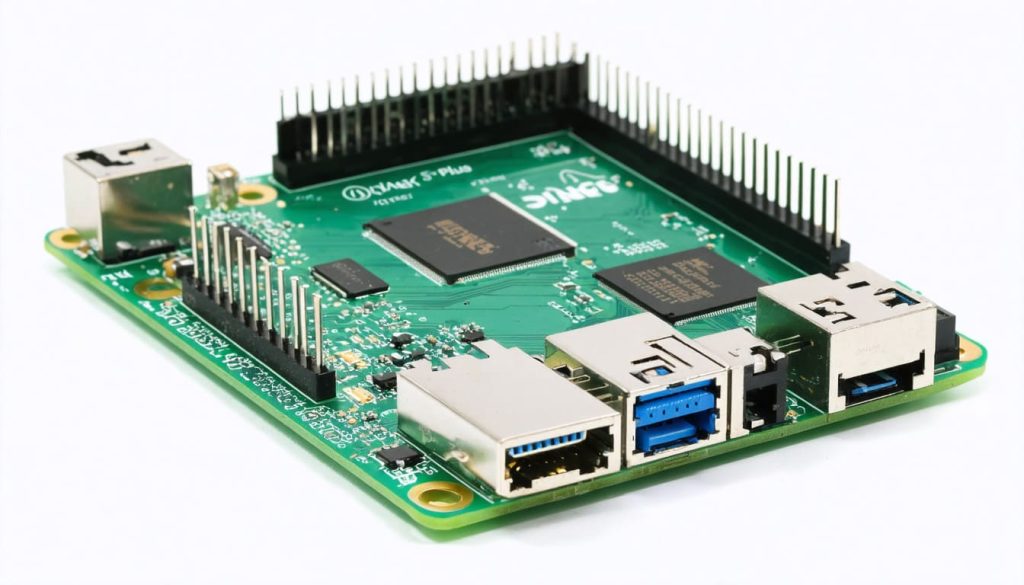
Comparing Specifications and Performance
1. Processor and Speed
When getting into the guts of any SBC, the processor steals the show. Raspberry Pi and Orange Pi are no exception, both bringing their own unique strengths to the table.
Raspberry Pi, known for its community-driven development, punches above its weight with its latest models. For example, the Raspberry Pi 5 offers an impressive 30 GigaFLOPS, demonstrating significant computing capabilities. This makes it suitable for everything from educational projects to heavier computing tasks.
The architecture of the processor is designed to achieve a perfect balance of power and efficiency. This optimization allows it to excel at a broader range of tasks.
The Orange Pi 5 Plus isn't exactly a slouch, either.
With a major emphasis on speed and efficiency, it delivers a respectable 4.64 GigaFLOPS per watt.
This just shows what it’s capable of in terms of performance. It guarantees energy efficiency, which is vital for embedded and low-power applications.
The Orange Pi uses a bespoke processor configuration for a higher clock speed. With multiple cores, it excels at parallel processing and multitasking.
The Orange Pi 5 Plus and Rock 5 Model B provide good speed, with more than 20 frames per second. By comparison, the Raspberry Pi 5 lags behind at 18 frames per second.
2. Memory and Storage
Another crucial component that drives the overall SBC performance is memory, particularly in the context of various computing tasks. The latest Raspberry Pi models, including the flagship Raspberry Pi 5, offer a choice of RAM options, with configurations of 2GB, 4GB, and even 8GB. This flexibility is crucial for multitasking, allowing the Pi to run several applications simultaneously, which is essential for users with specific hardware needs.
The Raspberry Pi works smoothly with many operating systems, such as Raspberry Pi OS, Ubuntu, and Windows IoT. This versatility gives users the freedom to select the OS that best suits their requirements, making it a reliable choice for various computing tasks and increasing its appeal in the SBC market.
The Raspberry Pi works smoothly with plenty of operating systems, such as Raspberry Pi OS, Ubuntu, and Windows IoT. This flexibility gives users the choice to use the OS that best suits them.
Additionally, the Orange Pi 5 Plus and Rock 5 Model B models come equipped with M.2 M Key and E Key slots. These advanced hardware features enhance storage capabilities, improve access speed, and increase storage capacity, which can be especially useful for projects that need to handle large datasets or store extensive multimedia files.
In summary, both the Raspberry Pi and Orange Pi boards provide compelling options for users seeking powerful SBCs. With their advanced hardware features and flexible memory configurations, they cater to a wide range of applications, making them ideal for makers and developers in the ever-evolving SBC landscape.
3. Connectivity Options
Connectivity is one of the most important aspects of SBCs and often determines how versatile an SBC will be.
Raspberry Pi models shine thanks to their extensive ports selection. They have multiple USB ports, HDMI, Ethernet, and a 3.5mm audio jack. These ports make it easy to connect to many peripheral devices.
The Raspberry Pi is the preferred choice for a wide variety of DIY projects and educational purposes.
GPIO pins empower users to dive into hardware-interfacing projects. This feature is a fairly significant expansion of the Raspberry Pi’s potential use cases in various fields.
Orange Pi models, especially the Orange Pi 5 Plus, come with an impressive variety of ports.
The Orange Pi is cheap and full of HDMI ports. These ports support up to 8Kp60 output and 4Kp60 input, providing a robust multimedia experience.
The Orange Pi 5 Plus and Rock 5 Model B both have audio jacks. This expands convenience tremendously for audio-focused applications.
Orange Pi boards support a variety of operating systems, including Android, Ubuntu, and Debian. This diversity shows their adaptability to different computing environments.
4. Power Consumption
Power consumption is a serious consideration when it comes to projects where efficiency counts, especially for single board computers (SBCs) like the Raspberry Pi. Known for low power consumption, these models are ideal for projects that prioritize energy efficiency, making them a popular choice among makers.
The Orange Pi 5 Plus and Rock 5 Model B represent a new level of efficiency in the SBC market. Not only are these models 50% faster, but they also produce less power than the Raspberry Pi 5, providing a compelling option for those wanting to push performance without sacrificing energy needs.
Community support is another factor in which Raspberry Pi has historically excelled. The extensive documentation and forums offer strong support, making it a favorite for both hobbyists and educators in various computing tasks.
Orange Pi, on the other hand, presents an affordable alternative that excels in the price segment. It offers advanced hardware features and similar capabilities at an even lower price point compared to its Raspberry Pi counterpart.
Both platforms have their limitations, too, particularly in terms of software support. While the Raspberry Pi enjoys a slight edge due to its established ecosystem, the Orange Pi community is rapidly growing and providing valuable resources.
In conclusion, while the Orange Pi boards are a solid choice for those with specific hardware needs, the iconic Raspberry Pi series remains a reliable power supply option with superior community support and software compatibility, making it a preferred SBC for many projects.
5. Performance Benchmarks
The robustness of Raspberry Pi's performance metrics has led many to consider it a trusted companion for countless projects, especially in the realm of educational and hobbyist endeavors. The main difference between Raspberry Pi and its competitors, like Orange Pi boards, lies in their specific hardware needs and capabilities.
The overall polished software experience, enhanced by various operating systems, is something that stands out to users. Combined with robust community support, the platform has become a beloved favorite among newcomers and seasoned developers alike, particularly when utilizing the preferred RPi desktop OS.
Raspberry Pi excels in educational and hobbyist projects, often outperforming other single board computers in many SBC tasks. Its impressive ability to tackle a wide range of tasks showcases smart design philosophy, making it a powerful option for various computing tasks.
The iconic Raspberry Pi series features advanced hardware options that cater to a diverse user base. Additionally, the solid performance and reliability of this platform make it a compelling choice for projects requiring substantial processing power.
Overall, the Raspberry Pi's rich connectivity options and ample RAM choices provide a superior choice for users looking to engage in sophisticated computing tasks. Its position in the SBC market as a performance king is well-deserved, thanks to its balance of affordability and capability.
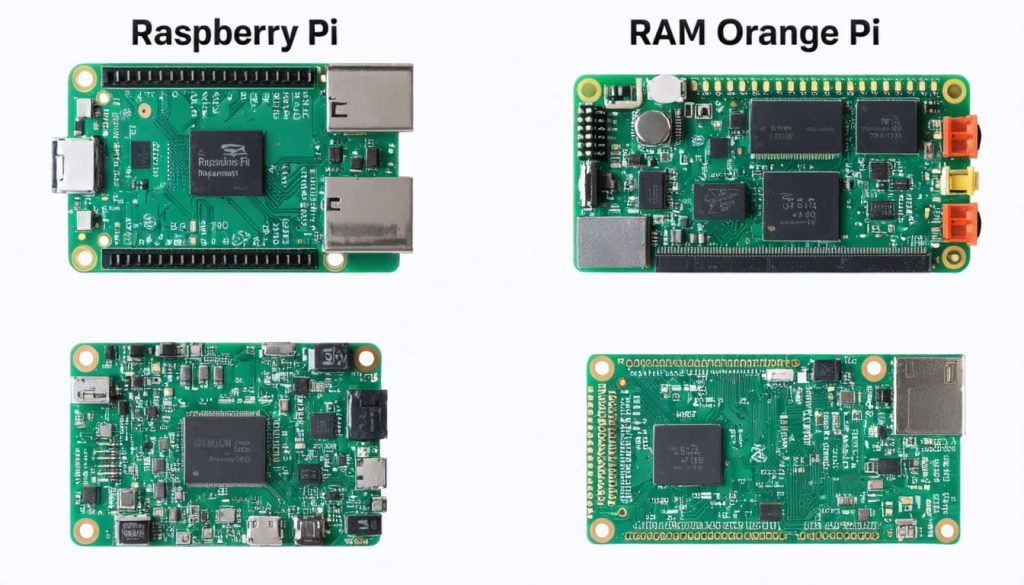
Key Features Overview
Raspberry Pi Features
Tech fans adore Raspberry Pi partly due to its large community members. They also love that there's a ton of tutorials, guides, and accessories available.
The Raspberry Pi is pricier than many out there, including its Orange Pi rival. This price point is higher due to its unique features and capabilities. This can be a deciding factor if you're on a tight budget.
Nonetheless, the Raspberry Pi's ecosystem is very rich and mature, which makes the investment worth it.
The Raspberry Pi 5 sticks with the classic flagship size of around 90mm x 60mm. It also packs a powerful VideoCore VII GPU. This makes it fairly capable of running graphic-heavy tasks smoothly.
Some variants of Raspberry Pi have limits on the hardware specifications. This can be a limitation when trying to stretch what these diminutive computers are capable of.
The performance of the Raspberry Pi 5 is quite solid. It might not include some high-end hardware options, like the ARM Mali-G610 GPU with integrated NPU to supercharge computing power available with some Orange Pi models.
Setting up a Raspberry Pi can be tricky at times, especially for beginners. The potential nightmare in terms of configuration and software installation may be off-putting.
Fear not because there is more than enough community guidance out there to help you get there.
Whether it’s forums, YouTube tutorials, or official documentation, you’ll find no shortage of resources to get started.
You can usually find Raspberry Pi parts and accessories on the common market. This ease of access can be a major boon when you're sourcing components for your project.
Its easy accessibility makes it a convenient choice. It can be tinkered with or used to develop small-scale applications by both hobbyists and professionals.
Orange Pi Features
Orange Pi is the most affordable of the bunch. It provides good flexibility and is especially attractive to cost-conscious shoppers. If you're looking to save some bucks, look no further than Orange Pi!
It's powerful without costing a fortune.
Its flexibility is what sets it apart. It supports multiple operating systems, so you can run all sorts of software environments. This can be especially helpful if you have specific software needs or would like to try out different setups.
Some of the Orange Pi hardware is impressive, including the Orange Pi 5 Plus.
With dual full HDMI ports that can handle up to 8Kp60 video output, they are great candidates for media projects.
The Orange Pi 5 packs a powerful ARM Mali-G610 GPU and an NPU. This combination packs a great deal of processing power, making it suitable for demanding AI projects and other intensive apps.
It’s also important to consider the potential downsides.
Orange Pi lacks the same community support as Raspberry Pi. This may result in fewer tutorials and guides available, which can be tricky if you’re getting started on the platform.
The software quality varies massively from model to model with Orange Pi. This inconsistency can lead to unforeseen issues during setup or while in use.
Performance benchmarks vary widely across the various Orange Pi variants. It will require some research to figure out which model is best for your needs.
Advantages and Disadvantages
Raspberry Pi Benefits
When it comes to promoting computer science education, Raspberry Pi really shines.
On the plus side, it's an excellent tool for hands-on projects. Whether you’re a student or a hobbyist, Raspberry Pi opens up a world of possibilities.
These tiny, inexpensive computers allow you to get started coding and programming—crucial skills for today’s tech-centric world.
You can configure them to run different operating systems, like Raspbian or Ubuntu. They also have a number of GPIO (General Purpose Input/Output) pins for even more versatility.
These pins allow connections for various sensors and devices. Because of this, Raspberry Pi is the smart choice for home automation and Internet of Things (IoT) projects.
It's not just about education; Raspberry Pi is also quite accessible to students and DIY fans.
Join a thriving online community and see thousands of project examples.
You can make some amazing things with either the Raspberry Pi or its cousin, the Orange Pi!
Imagine constructing your own weather station, smart mirror, or even your own small-scale server.
It’s all possible.
Raspberry Pi advocates for the importance of coding and programming skills.
With languages such as Python, you can command hardware, automate tasks, and create applications.
That hands-on experience is priceless for anyone wanting to establish a strong foundation in tech.
Raspberry Pi Drawbacks
For everything Raspberry Pi has to offer, it has some notable limitations.
In the broader world of smart home solutions, Raspberry Pi is a major player, but it has its challenges.
Its processing power isn't enough for heavy lifting. That’s especially true when you consider it alongside more powerful options such as the Orange Pi 5 and Rock 5 Model B.
Raspberry Pi is still a good go-to for IoT device control because it's relatively user-friendly.
Most successful home automation projects incorporate sensors and actuators. Raspberry Pi can handle this, but it will need to have some extra add-ons or modules.
Orange Pi gives you a little more power for that sort of thing.
Orange Pi Benefits
Orange Pi brings its own advantages to the table. It’s a versatile and budget-friendly alternative, particularly in media playback situations.
Imagine you set up your own media center if you want Netflix or YouTube. Available with support for a variety of video formats and resolutions, Orange Pi will get the job done.
There are many software options for the boards, allowing you to customize your media experience.
The Orange Pi 5 and Rock 5 Model B both offer excellent performance across all hardware tests.
Where they excel is with 1080p video encoding, outperforming the Raspberry Pi 5.
The Orange Pi 5 Plus and Rock 5 Model B both offer dual onboard full HDMI ports.
This capability enables them to deliver beautiful 8Kp60 resolution, which is something the Raspberry Pi 5 cannot do.
Orange Pi Drawbacks
Raspberry Pi is the de facto streamer of the retro gaming world, and it gets the job done with its powerful CPUs. Orange Pi can also run lightweight gaming applications just as well, showcasing its versatility as a single-board computer. Both boards can be used for AI projects and experiments with machine learning; however, performance benchmarks can vary significantly.
For 4K video encoding, the Raspberry Pi 5 matches the performance of the Orange Pi 5 and the Rock 5 Model B, with all three devices capable of pushing out around 3.75 frames per second. The two that stood out for their efficiency are the Orange Pi 5 and the Rock 5 Model B, which nearly double the performance of the Raspberry Pi 5, making them compelling options in the SBC market.
In terms of storage capabilities, both boards utilize microSD cards, offering solid performance for various computing tasks. The advanced hardware features of the Orange Pi series provide a reasonable performance boost, making it a superior choice for users looking for alternatives to the Raspberry Pi.
The Orange Pi community continues to grow, providing support and resources for users exploring different use cases for their boards. With the introduction of various operating systems, including mainstream Linux distros, users can enjoy enhanced processing power and rich connectivity options.
Ultimately, while the Raspberry Pi remains an iconic choice, the Orange Pi offers a compelling alternative with its efficient performance and advanced hardware options, catering to the specific hardware needs of a diverse range of projects.
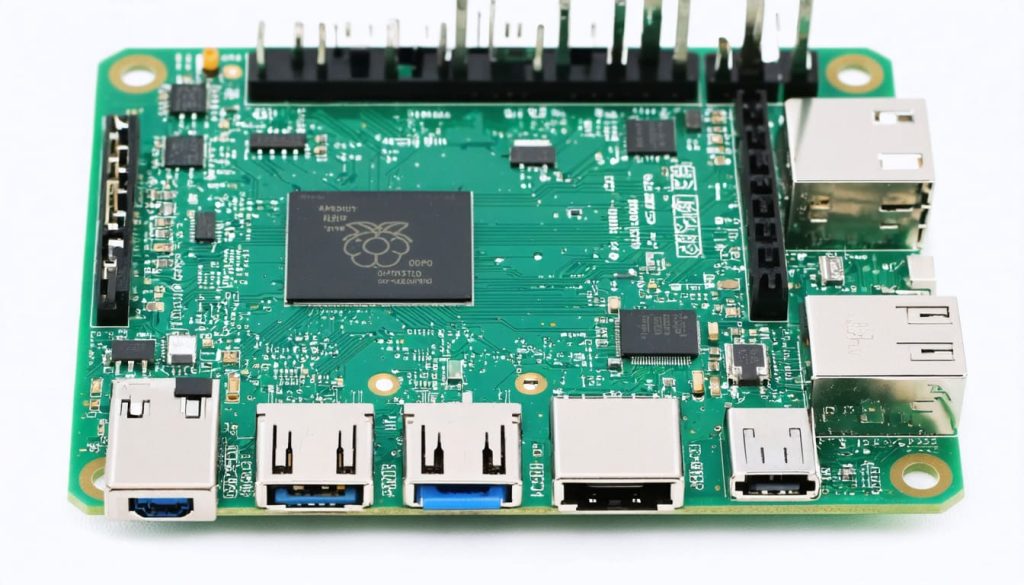
Use Cases and Applications
Educational Projects
The Raspberry Pi shines in educational projects due to its strong software support, making it a preferred choice among students and hobbyists. The official operating system, now known as Raspberry Pi OS, allows users to unlock the full power of this iconic Raspberry Pi series.
Not only is the Raspberry Pi a versatile option for various computing tasks, but it also offers a straightforward setup process. Users can quickly get started with coding or building small electronics projects, showcasing their utility in the maker community.
Supporting popular Linux distributions like Ubuntu and Fedora, the Raspberry Pi provides flexibility and familiarity for users accustomed to the Linux environment. This adaptability is one of the key differences that set it apart from competitors in the single-board computer market.
On the other hand, the Orange Pi offers a variety of operating systems, including Android and Armbian. This advanced hardware feature makes it ideal for projects needing a mobile operating system, catering to specific hardware needs.
The Orange Pi has a variety of operating systems, such as Android and Armbian. This versatility makes it ideal for projects with a requirement for a mobile operating system.
Both boards have their strengths, but the robust community support and widely available documentation give the Raspberry Pi a distinct advantage in educational environments. The Orange Pi community, while growing, still lacks the same level of resources.
Ultimately, while the Raspberry Pi is a solid choice for educational endeavors, the Orange Pi presents compelling options for users looking for advanced hardware features at a reasonable price range. Each board has its unique offerings, making them suitable for different use cases in the SBC landscape.
Home Automation Systems
One of the most colorful parts of the Raspberry Pi is its community.
This passionate tribe of users and developers has built thousands of projects, tutorials, and guides.
It makes it easy for anyone to set up home automation systems. You can even control your lights with nothing more than your voice.
Plus, the internet is rich with step-by-step resources to automate your everyday work!
Their community forums are filled with troubleshooting tips and advice, so you're never stuck for long.
Orange Pi users aren't quite as populous, but they do have a committed and expanding community. There are numerous online tutorials and guides available. Social media platforms help users meet others to share ideas and solutions.
Setting up a Pi-Hole on my home router using an Orange Pi was a great experience. I found the community forum guidance very helpful.
Both boards thrive on community contributions, but Raspberry Pi's larger user base generally means more resources and quicker solutions.
Media Centers and Streaming
A comparison between the Raspberry Pi and the Orange Pi when it comes to media centers and streaming applications reveals some key differences. Raspberry Pi models tend to be affordable, though the exact prices depend on the specs. Seasonal discounts and promotions often make them even more accessible, making them a preferred choice for many users on a budget.
Orange Pi offers competitive pricing and even has models with more than 8GB of RAM, making it ideal for high-end media applications such as video editing. With its advanced hardware features, the Orange Pi can handle tasks that require powerful CPUs, providing a substantial performance boost over some Raspberry Pi counterparts.
The pricing for each board is impacted by a few factors, such as hardware capabilities and additional capabilities. Look at all the resellers and online stores where you can buy these boards; many offer bundled accessories that enhance the boards’ functionality, including SD cards and power supplies.
When searching for a media center solution, many will sing the praises of Raspberry Pi for its cost-effectiveness and solid performance. However, what sets the Orange Pi apart is its ability to run Android, providing a more seamless streaming experience, which is a significant advantage for users focused on media consumption.
In terms of system compatibility, both boards have their strengths. While Raspberry Pi is often favored for its mainstream Linux distro support, Orange Pi's flexibility with operating systems like Android makes it a versatile option for various computing tasks.
Ultimately, the choice between these two boards will depend on specific hardware needs and user preferences. If you prioritize a powerful Raspberry Pi experience, the Raspberry Pi 5 offers compelling options, while those seeking advanced hardware features may find Orange Pi to be a superior choice.
In conclusion, whether you opt for a Raspberry Pi or an Orange Pi, both boards offer unique advantages in the SBC market, catering to different use cases and user requirements.
Gaming and AI Capabilities
In the realm of gaming and AI, the decision between Raspberry Pi and Orange Pi ultimately depends on your requirements.
The cost-effectiveness of each option depends on the features you need.
Raspberry Pi is an excellent place to start for simple gaming and AI projects. For heavier workloads, the Orange Pi really shines.
The Orange Pi is able to run games like SuperTuxKart on Debian with impressive ease. However, you might have to adjust them to get the best results.
The long-term value of spending money on either board depends on the project's needs.
What makes Orange Pi the best choice for gaming and video editing is its support for over 8GB of RAM.
It is important to consider hidden costs. Accessories and peripherals are often needed to realize these boards’ potential fully.
Below is a summary table comparing prices of popular models to help you decide:
|
Board Model |
Price Range |
RAM Capacity |
Unique Features |
|---|---|---|---|
|
Raspberry Pi 4 |
$35 - $55 |
Up to 8GB |
Extensive OS support, community-driven |
|
Orange Pi 4 |
$60 - $80 |
Up to 16GB |
Android support, high RAM capacity |
Software Support and Community
Operating System Options
As you delve into the world of single-board computers (SBCs), you’ll quickly find Raspberry Pi and Orange Pi at the forefront, showcasing their advanced hardware features. These powerful Raspberry Pi alternatives are extremely versatile and have a massive variety of uses, catering to specific hardware needs.
Raspberry Pi supports a broad range of operating systems, including Raspberry Pi OS, Ubuntu, and Windows 10 IoT Core. This extensive selection is a huge boon, especially if you like trying out new systems and exploring various computing tasks.
On the other hand, Orange Pi supports Android, Ubuntu, and Debian, among others. While its support isn't as extensive as Raspberry Pi's, it still serves as a reliable choice for many projects, making it a compelling option in the SBC landscape.
The main difference in software support often comes down to the community backing each platform. The Raspberry Pi community is large and active, contributing to software libraries and support tools that enhance the overall SBC performance.
While smaller, members of the Orange Pi community are equally passionate and provide valuable insights and solutions. This camaraderie ensures that users on both platforms can find the support they need for their projects, regardless of whether they choose a Raspberry Pi or an Orange Pi board.
Community Support and Resources
The community support factor, particularly for Raspberry Pi, is at the helm of the SBC market. It’s like a metropolis with forums, wikis, and countless tutorials that will walk you through every project hiccup, making it a superior choice for many SBC tasks. This enthusiasm from the community creates a treasure trove of online resources, which is a godsend when troubleshooting or seeking inspiration for advanced hardware features.
While Orange Pi's expanding community is growing, it is not as widespread as Raspberry Pi's. However, it does have a cult following and some resource availability, making it a compelling option for those with specific hardware needs. This means a smaller community may provide fewer resources, yet it fosters a tight-knit environment where users often provide one-on-one advice and individual assistance.
Despite the differences, both communities offer valuable insights and support. The main differences lie in the availability of resources and the scale of community engagement. Raspberry Pi boasts a rich connectivity options network, while Orange Pi users benefit from a more personalized experience.
Ultimately, whether you choose Raspberry Pi or Orange Pi, both platforms have their merits. The iconic Raspberry Pi series leads with extensive community support, while Orange Pi presents a viable option for those looking to explore alternatives with powerful CPUs and advanced hardware options.
Market Trends and Availability
It’s a competitive space for single-board computers (SBCs), and Raspberry Pi and Orange Pi are two of the most important brands.
These boards have become indispensable tools for hobbyists, educators, and developers, fueling innovation in a range of industries.
Availability can be a barrier. What sets Raspberry Pi apart from Radxa is its broader accessibility. It uses distribution channels like OKDO, Allnet, 3Logic, and Ameridroid to broaden its availability.
Orange Pi is not as widely available.
Supply chain issues have also hampered the availability of these devices, a problem compounded by global events.
That's because it has a ripple effect on the market and what prices can be expected.
The competition is really challenging. Manufacturers are willing to try to outdo each other both in pricing and features, continually pushing the envelope on what these compact devices can accomplish.
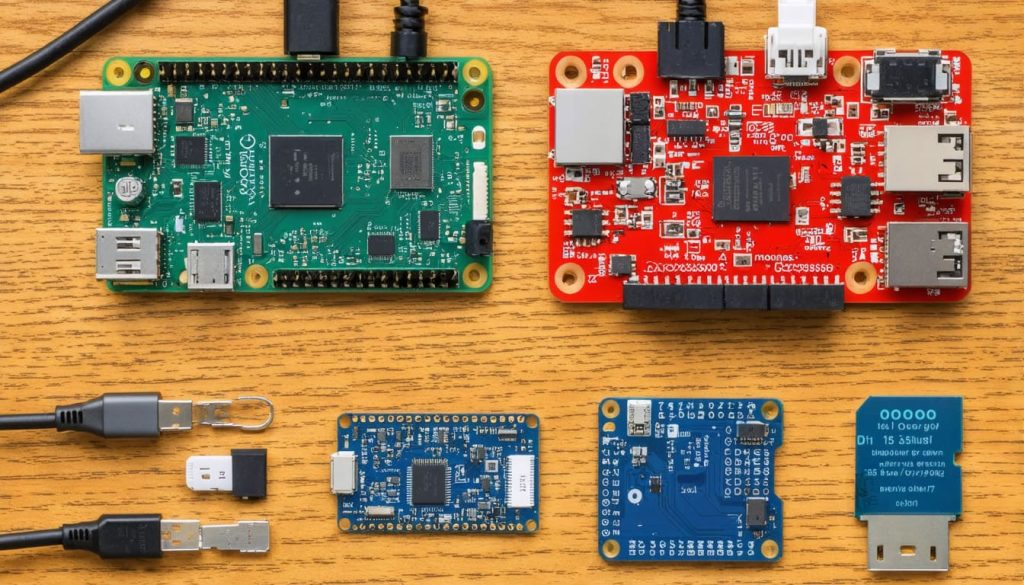
Price and Availability
Cost Comparison
Let’s get down to the dollars and cents of these nifty gadgets in the single-board computer market. If you’re looking for a low-cost option, the Raspberry Pi 5 is the one to beat. It's the best value overall, particularly if you're watching every penny. Its 8GB RAM variant is priced at about $80, making it an affordable choice, leaving you a little extra dough to grab accessories like a HAT, a case, or even a heatsink.
The Orange Pi doesn’t shy away from being the budget champ either, showcasing its compelling processors. This one was definitely worth the money, as you can get the 8GB model for about $100 on Amazon or even less at $90 on AliExpress.
If you can stretch your budget a little, check out the Orange Pi 5. This powerful Raspberry Pi alternative includes LPDDR5 RAM that is 50% faster than the Raspberry Pi’s LPDDR4X RAM, so you’re getting more performance for your dollars.
Overall, both the Raspberry Pi and Orange Pi boards offer solid performance and advanced hardware features, catering to various computing tasks while maintaining a reasonable price range.
Market Availability
If you're attempting to buy these single-board computers, the Raspberry Pi is easier to find due to its mainstream Linux distro availability. With the marketplace, it’s well-stocked, making it easy to purchase from a range of outlets that cater to various computing tasks.
The Orange Pi, on the other hand, takes a little more patience and persistence. If you want to get your hands on an Orange Pi 5 Pro, you’re in luck because you can find it on AliExpress. Just don’t forget that shipping speeds can be all over the place! Sometimes, it’s a quick arrival, and other times, it’s longer than expected.
One of the key differences between the two boards is their size. The Orange Pi 5 Pro is slightly larger, measuring 89mm by 56mm, while the Raspberry Pi 5 is smaller at 85mm by 56mm. This size difference may influence your decision based on how you plan to use or enclose your board, especially if you have specific hardware needs.
Port Layout and Features
The diversity of ports on these two boards can greatly enhance your experience. Their layout also contributes to how well you use them.
Raspberry Pi includes extremely versatile ports: plentiful USBs, HDMI, and GPIOs to make your projects shine.
The Orange Pi is a little bit of an adventurer's option. It offers an impressive suite of features, including MIPI interfaces for camera and display connections.
This feature can change the way you approach advanced projects. It's especially great for doing visual processing and display outputs!
To help you visualize, here's a quick snapshot of the port layouts:
-
Raspberry Pi 5: USB Ports: 4, HDMI Ports: 2, GPIO Pins: 40, MIPI Interfaces: No.
-
Orange Pi 5: USB Ports: 4, HDMI Ports: 1, GPIO Pins: 26, MIPI Interfaces: Yes.
Layouts and available types of connectors are critical for a successful project. They directly affect your design choices and how easily you can implement your ideas.
If you're going to use multiple external devices, the Raspberry Pi's extra HDMI port gives you more flexibility. It lets you plug in more devices, and it makes the overall experience better.
If your project requires high-speed data processing, the Orange Pi's MIPI interfaces may be significant. They shine with cameras and unique display setups, making them a game changer.
Design and Form Factor
Physical Design Differences
Talking design, the differences between Raspberry Pi and Orange Pi are night and day.
Take the Orange Pi 5, for example, which offers a flexible and capable form factor. This product is ideal for a variety of projects.
Dive into the Model B variant, which boasts LPDDR4 memory and full compatibility with Arduino!
This flexibility is a total game-changer if you're shooting for something beyond basic computing.
You get a compact and lightweight board weighing somewhere around 45g. This design gives it easy handling and transport, making it ideal for on-the-go projects or tight spaces.
Now, don’t sleep on the Raspberry Pi 5. It lacks the same hardware flexibility as the Orange Pi, but it’s got its charms.
Still, its standout feature is its dual HDMI outputs that make it stand out. The software is polished and support is solid. A large, engaged community creates a continuous stream of ideas and solutions. This makes it a go-to for those who value reliability and ease of use.
If you’re counting grams, you’ll thank the Orange Pi for being feather-light. Its portability may very well win you over!
Port and Interface Layout
Moving onto ports and interfaces, Orange Pi 5 really shows off with a smorgasbord of connectivity options.
This isn't your basic device. It's got a powerhouse design, with three USB 2.0 ports and an extra USB 2.0 OTG interface. That’s plenty of space for peripherals, which is ideal if you’re connecting multiple devices.
Orange Pi 5 doesn’t scrimp on advanced features. It supports PCIe and 8K video output.
This feature-stuffed alternative offers excellent value for money, particularly if you're on a budget yet want some high-end capabilities.
Need even more connectivity? The Orange Pi 5 comes prepared with a Gigabit Ethernet port, Wi-Fi 6, and Bluetooth 5.2.
This lets you easily send data across the internet and provides high-speed data transfer and strong wireless connectivity.
It’s about arming you with the resources you need to create amazing projects without costing a fortune.
Raspberry Pi 5 also has dual HDMI outputs. This is a major advantage of dual displays.
Its polished software and strong community support make it an excellent choice. You can count on it to keep your projects humming from day one.
Conclusion
Raspberry Pi shines with strong community support and a wide range of uses.
It’s awesome for beginners, schools, and hobbyists who want to mess around and learn.
You receive plenty of resources and assistance to help you get going.
Orange Pi packs more power for the price.
It appeals to those who are looking for more punch in performance or niche applications.
Consider this option if you require additional memory.
It’s also good if you want access to certain features that the Raspberry Pi lineup doesn’t provide.
Think about what you need most. Is it support and resources, or is it power and price?
This choice makes all the difference for your career in tech. Tackle projects with the spirit of learning.
Explore, learn, and create with the board that best matches your dreams. Are you ready to get started?
Go further, test more, and see where it takes you!
Frequently Asked Questions
What are the key differences between Raspberry Pi and Orange Pi?
Raspberry Pi has a larger community and better software support, while Orange Pi often provides more powerful processors for the price segment. With various advanced hardware features, design and capabilities vary, so choose based on your specific hardware needs.
Which is more affordable, Raspberry Pi or Orange Pi?
Generally, Orange Pi boards are more budget-friendly, offering compelling specifications while making some sacrifices for an affordable price. The main differences in availability can impact the final price.
How do Raspberry Pi and Orange Pi compare in terms of performance?
Orange Pi usually features more powerful CPUs and ample RAM options, while the Raspberry Pi is known for its stability and broad compatibility. For various computing tasks, consider the Raspberry Pi for overall compatibility and the Orange Pi for its superior processing power.
What are common use cases for Raspberry Pi and Orange Pi?
Raspberry Pi shines more in educational projects and DIY electronics, while Orange Pi, with its powerful CPUs and advanced hardware features, is ideal for intensive applications like media centers and lightweight servers.
How does software support differ between Raspberry Pi and Orange Pi?
Raspberry Pi boasts better software support and a larger ecosystem. At the same time, Orange Pi, although lacking in official backing, offers a solid third-party ecosystem and forums, making it a viable option for various computing tasks.
What are the design and form factor differences between Raspberry Pi and Orange Pi?
Raspberry Pi maintains a consistent layout across models, while Orange Pi boards offer varied designs and connectors. When selecting a board computer, consider form factor and compatibility to meet your specific hardware needs.
Where can I purchase Raspberry Pi and Orange Pi?
Raspberry Pi boards are sold at most major electronics retailers, while Orange Pi products must be acquired online, making it essential to check official websites for authorized distributors and stock updates.


Leave A Comment